

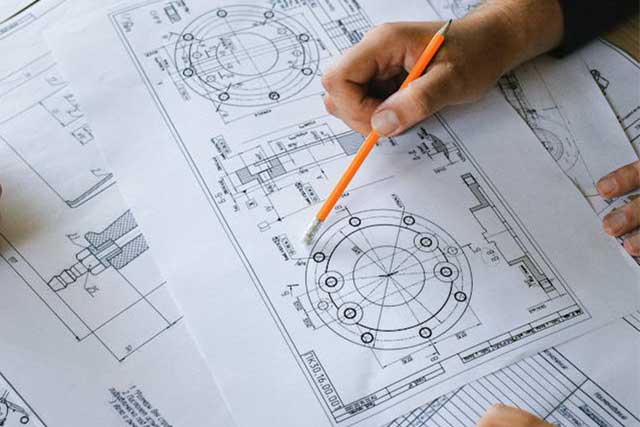
Process Design & Engineering is a structured engineering service that converts your production idea into a practical, safe, and efficient plant-ready process. It ensures that your manufacturing route, equipment selection, utilities planning, and operational workflow are technically sound, cost-optimized, and scalable. Our Process Design & Engineering service helps industries build new plants, expand capacity, modernize existing units, and solve recurring production challenges with confidence.
Our approach is practical and performance-focused. We study your product requirements, capacity targets, raw material constraints, site conditions, and compliance needs to develop a complete process framework. Whether you are setting up a greenfield unit, upgrading a brownfield plant, or planning a new production line, our engineering inputs reduce rework, improve safety, and accelerate project execution.
What This Service Includes
Our Process Design & Engineering service delivers a complete and structured engineering roadmap that supports plant setup, execution, optimization, and compliance readiness.

Process Design & Flow Development
We develop the full process route including process flow logic, key operating parameters, production sequence, material movement, and efficiency points. Outputs typically include Process Flow Diagram (PFD) support and process description.
Equipment Selection & Preliminary Sizing
We recommend and validate equipment types and sizes based on duty, throughput, material behavior, and operating conditions. This includes major equipment selection such as reactors, mixers, tanks, pumps, heat exchangers, dryers, boilers, compressors, etc.
Utility Planning & Consumption Estimation
We estimate required utilities such as steam, power, water, compressed air, cooling, nitrogen, fuel, and effluent load. Utility planning ensures stable operations and prevents under-sizing during commissioning.
Safety & Risk Readiness
We identify process safety requirements and recommend preventive actions—such as safe handling points, isolation philosophy, ventilation, and risk reduction inputs. Where required, we support HAZID/HAZOP coordination inputs.
Key Benefits of Services
Our Process Design & Engineering approach is built on efficiency, safety, and execution clarity—helping you design right, build faster, and operate smoother.
- Build a technically correct process before capital investment
- Reduce rework and project delays through clear engineering definition
- Improve plant safety and operability from the design stage
- Optimize equipment selection to control CAPEX and operating cost
- Ensure utilities are correctly planned for stable production
- Support smoother commissioning and faster ramp-up
- Create a strong base for DPR, approvals, and vendor finalization
Frequently Asked Questions
At the concept stage (before ordering equipment), during expansion planning, modernization, or when an existing plant is facing low output, high cost, or safety/quality issues.
Yes. We provide detailed Process Flow Diagrams (PFDs) and Piping & Instrumentation Diagrams (P&IDs) as part of our Process Design & Engineering services.
Yes. A structured process design package strengthens documentation for audits, safety planning, and approvals, and supports smoother liaisoning and certification readiness.
Typically: process description, MEB calculations, equipment list and sizing inputs, utility estimates, instrumentation/control inputs, and layout/operability guidance (scope-based).
Yes. Correct sizing, smart utility planning, and layout efficiency reduce overdesign, rework, and operating costs—often saving significant CAPEX and OPEX.
Yes. We can support vendor discussions, technical evaluation, installation planning, commissioning guidance, and performance stabilization as needed.